Menopause Exercise Plan: What Helps and a Weekly Routine
Regular exercise can help with some menopause symptoms and protects your bones, according to health sources, but it is not hormone treatment. Here is what the sources say about each symptom and a weekly routine of strength, walking and yoga.
 By Abdelrhman MohamedCo-Founder & Head of Operations and Expansion
 Reviewed by Dr. Hagar AlyAmerican Board-Certified Clinical Pharmacist & Clinical Nutritionist
 Reviewed by Youssef HarounHead of Fitness & Sports PerformancePublished
In this article 12
- What is the menopause?
- What the sources say about exercise and symptoms
- What exercise does not do
- A weekly menopause exercise routine
- The strength session
- Practical tips while you train
- Frequently asked questions
- Can exercise replace hormone therapy?
- What is the best exercise for the menopause?
- Is yoga enough on its own?
- My symptoms started and I have never exercised. Should I start now?
- The bottom line
A good menopause exercise plan combines strength training, weight-bearing activity such as walking, and something calming like yoga, spread across the week. Health sources say regular exercise can help with some menopause symptoms, such as mood changes, and helps protect against weakening bones. It is not hormone treatment, though, and it does not replace advice from your doctor.
Below: what the sources say about exercise and each symptom, what exercise cannot do, a weekly menopause exercise routine and practical training tips. To start with a trainer who checks your form at home, read our guide to a female personal trainer at home.
What is the menopause?
The NHS describes the menopause and perimenopause as a natural part of life, when periods change and eventually stop due to lower hormone levels. It usually happens between 45 and 55, but can be earlier. The US National Institute on Aging adds that symptoms vary widely: some women have few or none, while others have symptoms for years.
The symptoms the NHS lists on its symptoms page include hot flushes, sleep problems, mood changes, weight gain around the stomach and upper body, muscle aches and joint pains, and weakening bones.
What the sources say about exercise and symptoms
On its page of things you can do for menopause symptoms, the NHS says eating well, exercising and looking after your mental wellbeing can help with symptoms and help you stay well in the future. Here is what the sources say symptom by symptom:
| Symptom | What the sources say | What it means for you |
|---|---|---|
| Mood changes and anxiety | The NHS suggests rest, regular exercise and relaxing activities. The World Health Organization says physical activity reduces symptoms of depression and anxiety in adults | Regular activity on most days, even if it is walking |
| Hot flushes and night sweats | The NHS lists regular exercise among things to try, with lightweight clothing, a cool bedroom and lowering stress | Exercise is one thing to try, not a guaranteed fix |
| Sleep | The WHO lists improved sleep among the benefits of physical activity for adults | Consistency matters more than intensity |
| Weakening bones | The NHS recommends regular exercise focused on activities where your feet and legs support your weight, such as walking and dancing, and resistance exercise with weights | Two strength days plus walking on most days |
| Joint and muscle aches | The NHS says strength and flexibility exercises help reduce joint pain and improve balance | Strength work at a suitable load, plus stretching |
What exercise does not do
- It is not hormone treatment: the sources present exercise as one of the things that help with some symptoms, not as a substitute for treatment from a doctor. The National Institute on Aging advises women concerned about symptoms to talk with a doctor about lifestyle changes and other options that might help. Hormone therapy and other treatments are a medical decision outside this article.
- It does not burn belly fat on its own: the NHS says weight gain is common at this stage, often around the stomach. But no exercise burns fat from one chosen area: ab exercises strengthen the muscle, and fat reduces across the whole body.
- No results by a date: every woman responds differently.
A weekly menopause exercise routine
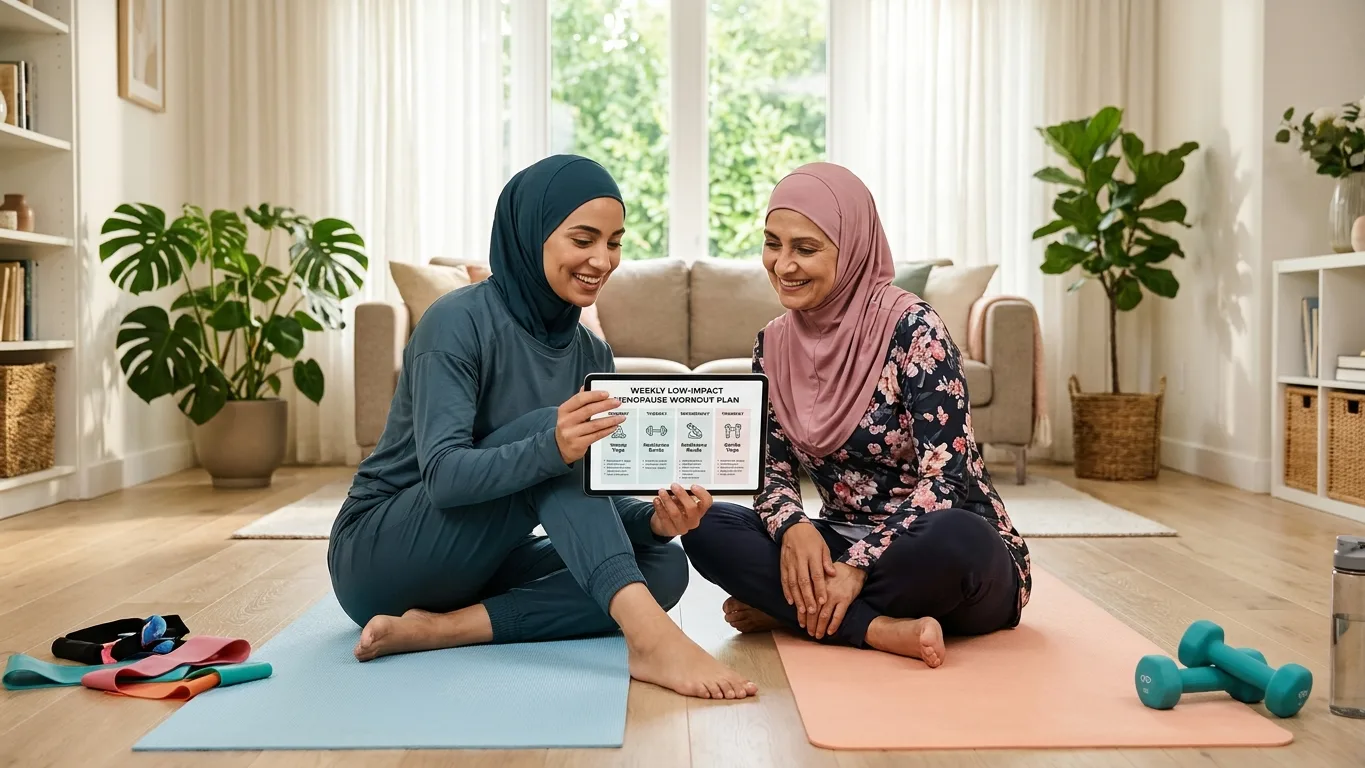
The plan follows the WHO recommendation for adults: 150 to 300 minutes of moderate activity a week, plus muscle strengthening on 2 or more days. The NHS also lists yoga and tai chi among relaxing things to try.
| Day | Activity | Time | Note |
|---|---|---|---|
| Saturday | Strength training (table below) | About 30 minutes | 5-minute warm-up first |
| Sunday | Brisk walk | 30 minutes | You can talk but not sing |
| Monday | Yoga or gentle stretching | 20 to 30 minutes | For relaxation and flexibility |
| Tuesday | Strength training | About 30 minutes | At least one rest day between strength days |
| Wednesday | Brisk walk | 30 minutes | Can be split through the day |
| Thursday | Brisk walk or dancing | 30 minutes | Something you enjoy |
| Friday | Rest or an easy walk | As you like | Rest is part of the plan |
The strength session
The NHS describes a set as 8 to 12 repetitions, with at least 2 sets, or 3 for more benefit.
| Exercise | Sets | Reps | Easier | Harder |
|---|---|---|---|---|
| Chair squat | 2 to 3 | 8 to 12 | Shallower, holding a chair back | Goblet squat with a dumbbell |
| Wall push-up | 2 to 3 | 8 to 12 | Stand closer to the wall | Incline push-up on a sturdy table |
| Resistance band row | 2 to 3 | 8 to 12 | Lighter band | Stronger band |
| Glute bridge | 2 to 3 | 8 to 12 | Shorter range | Weighted glute bridge |
| Calf raise | 2 | 8 to 12 | Holding a chair | No support |
Practical tips while you train
- Hot flushes: the NHS's general tips for hot flushes include lightweight clothing, a fan and a cold drink. Choose light, breathable sportswear, keep water close and train somewhere well ventilated.
- Bladder leaks: the National Institute on Aging notes that some women at this stage leak urine during exercise, sneezing or laughing, and advises talking with a doctor about what might help, including exercises. Do not give up training because of it; speak to your doctor.
- Poor sleep: on days after a bad night, lower the intensity rather than skipping the session.
- Privacy: if going to a gym feels hard at this stage, compare your options in ladies' gym vs a female trainer at home.
Frequently asked questions
Can exercise replace hormone therapy?
No. The sources do not present exercise as hormone treatment, but as one of the things that help with some symptoms. Any treatment for symptoms is for you and your doctor to decide.
What is the best exercise for the menopause?
There is no single exercise. The NHS advice combines regular exercise, weight-bearing activity, resistance work and relaxing activities such as yoga and tai chi.
Is yoga enough on its own?
The NHS counts yoga as both muscle-strengthening and relaxing. To protect your bones, though, it also recommends weight-bearing activity and resistance exercise with weights.
My symptoms started and I have never exercised. Should I start now?
Yes, gradually. The NHS advises speaking to your GP first if you have not exercised for some time or have a medical condition. If you decide to start with a trainer, read what happens in your first session and how to choose a female personal trainer.
Health notice: a trainer does not diagnose or treat, and this article does not replace your doctor. See your doctor if your symptoms worry you, or if you have not exercised for some time or have a medical condition. Stop exercising if you feel dizzy, have chest pain or pressure, or feel sick, as the National Institute on Aging advises.
The bottom line
According to the sources, exercise during the menopause can help with some symptoms, and it protects your bones when it combines strength work with weight-bearing activity. It is not hormone treatment, and treatment is a medical decision. Start gradually, spread activity across the week and choose what you can keep doing. With Sporship, a female trainer comes to your home, assesses you in the first session and builds a programme for your goal.
Photo: Corn cheese, licensed under CC BY-SA 4.0.
How this article was made: Drafted with the help of AI tools, then reviewed and edited by a Sporship specialist, using the sources linked in the article.