Exercise for PCOS: What the Evidence Says
No exercise treats PCOS, and the international guideline says any regular activity in line with general guidelines helps. Here is what the evidence really says, a realistic weekly PCOS exercise routine, and when to see a doctor.
 By Ahmed SobhyCo-Founder & CEO | Fitness Operations & Business Director
 Reviewed by Dr. Hagar AlyAmerican Board-Certified Clinical Pharmacist & Clinical Nutritionist
 Reviewed by Youssef HarounHead of Fitness & Sports PerformancePublished
In this article 13
- What PCOS is, and its new name
- What the evidence says about exercise for PCOS
- How much exercise a week
- A realistic PCOS exercise routine
- Strength session at home (twice a week)
- The rest of the week
- What makes it hard to keep going
- When to see a doctor
- Frequently asked questions
- What is the best exercise for PCOS? Is HIIT better?
- Will exercise make my periods regular?
- Should I exercise if my weight is normal?
- The bottom line
There is no special exercise that treats PCOS. The international PCOS guideline says no type or intensity of exercise has been shown to be better than another, and that any activity in line with general guidelines benefits your health. A PCOS exercise plan is a core part of managing the condition alongside medical care, not a replacement for it. The best routine is the one you can keep up.
Below: what PCOS is, what the evidence says, a weekly routine, and when to see a doctor. If you would like a trainer to build your programme at home around what your doctor advises, read our guide to a female personal trainer at home.
What PCOS is, and its new name
The NHS (the UK's National Health Service) describes it as a hormone condition that can affect hair growth, periods, fertility and mood. Its main symptoms include:
- irregular periods or long gaps between periods
- excess hair growth, or hair loss
- weight gain or difficulty losing weight
- difficulty getting pregnant, depression or anxiety, oily skin and acne, and feeling very tired
The NHS says there is no cure, but treatments and lifestyle changes can help. It notes a higher risk of conditions such as type 2 diabetes and high blood pressure, which regular check-ups help reduce.
You may also see a new name. According to Monash University's guideline page, since 12 May 2026 the condition has been called polyendocrine metabolic ovarian syndrome (PMOS) instead of polycystic ovary syndrome (PCOS), and the NHS now uses the new name. The condition itself has not changed, and this article says PCOS because most people still search for it that way. The same page says it affects one in eight women.
What the evidence says about exercise for PCOS
The key reference is the recommendations of the 2023 International Evidence-based Guideline for PCOS. On lifestyle and exercise it says:
- Lifestyle is a core part of management. It recommends lifestyle change, exercise alone or combined with healthy eating and behavioural support, for all women with PCOS to improve metabolic health, including abdominal fat and blood fats. It rates the certainty of the evidence for this as very low.
- No exercise is proven better than another. It says the evidence does not support any one type or intensity of exercise over another, and that any activity in line with population guidelines has health benefits.
- Benefits do not depend on weight loss. It states there are benefits to a healthy lifestyle even without losing weight.
- Goals are set with you. Goals should be developed together with the woman, around her own preferences, and professionals should be aware of weight stigma.
A Cochrane review listed on PubMed on lifestyle changes in PCOS found they may improve the free androgen index, weight and BMI, based on low-quality evidence. It found no studies that measured menstrual regularity or live birth. So exercise helps your health, but it is not a treatment for PCOS or a promise of regular periods.
How much exercise a week
The guideline points to general population guidelines, the same ones the World Health Organization sets for adults:
- 150 to 300 minutes of moderate activity a week, or 75 to 150 minutes of vigorous activity, or a mix of the two
- muscle-strengthening exercise on 2 days a week, which the guideline suggests should be non-consecutive
- less time sitting, since replacing sitting with any movement, even light, helps
The guideline also suggests doing aerobic activity in bouts of at least 10 minutes, aiming for at least 30 minutes a day on most days.
A realistic PCOS exercise routine
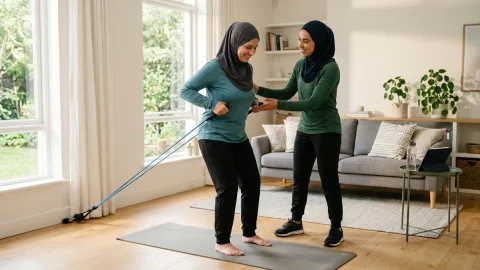
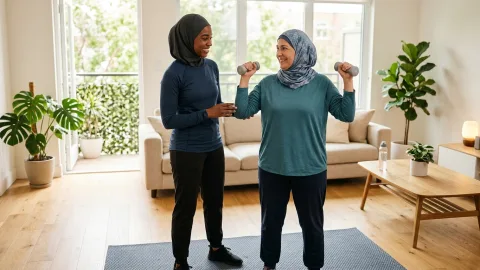
Here is one example that fits those numbers. It is not a treatment plan: 3 days of brisk walking and 2 non-consecutive strength days, such as Sunday and Wednesday.
Strength session at home (twice a week)
| Exercise | Sets and reps | Easier version | Harder version |
|---|---|---|---|
| Sit-to-stand squat | 3 x 10 to 12 | Use your hands on the chair | Goblet squat holding a dumbbell |
| Glute bridge | 3 x 12 | Shorter range of movement | Single leg, or a weight on the hips |
| Wall push-up | 3 x 10 | Stand closer to the wall | Push-up on a sturdy table edge |
| One-arm dumbbell row | 3 x 10 each arm | A water bottle instead of a dumbbell | A heavier dumbbell |
| Dead bug | 3 x 8 each side | Move the legs only | Extend opposite arm and leg together, slowly |
The rest of the week
| Activity | Time | Easier version | Harder version |
|---|---|---|---|
| Brisk walking | 30 to 40 minutes, 3 days | Three 10-minute walks in a day | Incline walking or a stationary bike at moderate resistance |
Complete beginners can start below this and build up; a trainer sets the starting level in your first personal training session.
What makes it hard to keep going
The guideline lists barriers such as body image concerns, fear of injury or failure, and mental health; the NHS lists feeling very tired among the symptoms. Measure progress beyond the scale (the weights you lift, how long you walk), remember that 10 minutes counts, and train where you feel comfortable: see ladies gym vs a female trainer at home and how to choose a female personal trainer.
When to see a doctor
The NHS advises seeing a GP if you think you might have PCOS, or if your symptoms are affecting your everyday life, work or relationships. Its page on missed periods also advises seeing a GP if you have missed 3 periods in a row, or missed a period with symptoms such as weight change, tiredness or facial hair growth. Diagnosis and treatment belong with your doctor.
Frequently asked questions
What is the best exercise for PCOS? Is HIIT better?
The guideline favours no single exercise or intensity. A sensible mix is walking plus strength training twice a week; high-intensity work is an option if you enjoy and tolerate it.
Will exercise make my periods regular?
Nobody can promise that. The Cochrane review found no studies that measured the effect of lifestyle change on menstrual regularity. The American College of Obstetricians and Gynecologists (ACOG) says weight loss may help regulate periods in women who are overweight; discuss that, and the medical treatments for irregular periods, with your doctor.
Should I exercise if my weight is normal?
Yes. The guideline says a healthy lifestyle has benefits even without weight loss, and that for women who are not overweight the focus is a healthy lifestyle and preventing weight gain.
Health notice: This article is general information and does not replace a doctor. PCOS needs medical diagnosis and follow-up, and exercise is part of management alongside treatment, not a substitute for it. If you are pregnant or trying to conceive, or have diabetes, high blood pressure or another condition, check with your doctor before starting and tell your trainer what they said. A trainer does not diagnose or treat.
The bottom line
No exercise treats PCOS, and no type has been proven better than another. The international guideline treats regular activity as a core part of managing the condition alongside medical care, with benefits that do not depend on the scale. Combine walking and strength training, and start with what you can manage.
On Sporship, a female trainer comes to your home, assesses you in the first session and builds a programme for your goal.
Photo: Toni Lluch, licensed under CC0 1.0.
How this article was made: Drafted with the help of AI tools, then reviewed and edited by a Sporship specialist, using the sources linked in the article.