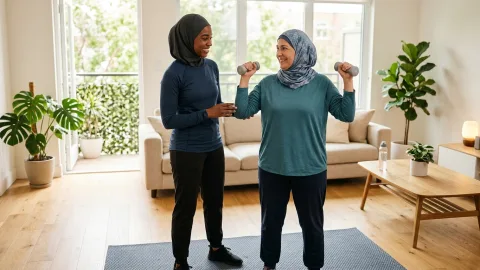
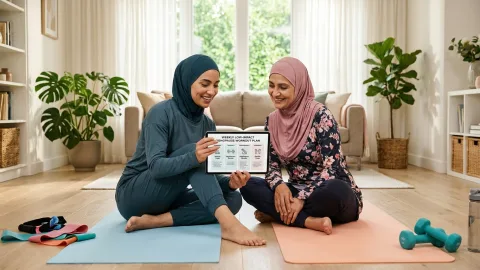
Osteoporosis Exercises for Women: What to Do and Avoid
Most women with osteoporosis can exercise safely by combining balance, strength and the right level of impact. Here are the osteoporosis exercises to avoid or adapt such as loaded forward bending and sit-ups, and why your doctor sets the plan after a fracture.
 By Ahmed SobhyCo-Founder & CEO | Fitness Operations & Business Director
 Reviewed by Dr. Hagar AlyAmerican Board-Certified Clinical Pharmacist & Clinical Nutritionist
 Reviewed by Youssef HarounHead of Fitness & Sports PerformancePublished
In this article 15
- What is osteoporosis, and why does it affect women?
- Before any exercise: who sets the programme?
- Osteoporosis exercises to avoid or adapt
- What is recommended, and how often?
- Balance first
- Strength
- Impact
- A sample home session after your doctor's approval
- Make your home safe
- Frequently asked questions
- Can exercise replace the treatment my doctor prescribes?
- Is walking enough?
- Are yoga and Pilates suitable?
- How do I choose a trainer for my condition?
- The bottom line
Osteoporosis exercises for women combine three things: balance exercises to lower your risk of falling, gradual strength training, and low or moderate impact exercise depending on your situation. You avoid or adapt movements that load the spine, such as bending forward while lifting, sit-ups and extreme twisting. After a diagnosis or a fracture, your doctor or physiotherapist should set the programme.
Below: who sets the programme, the osteoporosis exercises to avoid, and what is recommended. To train at home within your doctor's plan, read our guide to a female personal trainer at home.
What is osteoporosis, and why does it affect women?
The NHS describes osteoporosis as a condition that makes your bones weak, most common in older adults and women after the menopause, often with no symptoms until a bone breaks after a minor fall or injury. The US National Institute on Aging says it affects about one in five women over 50. The NHS recommends regular weight-bearing, strengthening and balance exercise, fewer fall risks, and care when lifting.
Before any exercise: who sets the programme?
The Royal Osteoporosis Society says most people with osteoporosis can exercise safely, but advises talking to your doctor or physiotherapist first if you:
- have a history of many broken bones or spinal fractures
- are recovering from a broken bone
- have questions or concerns about your own situation.
It recommends a physiotherapist if spinal fractures cause pain, or after many broken bones or falls. The US Bone Health and Osteoporosis Foundation says women at high risk of a fracture should work with a physical therapist on a safe programme, done in a pain-free range of motion.
The rule in this guide: after a diagnosis or a fracture, your doctor or physiotherapist sets the programme. A trainer does not write a treatment plan; she helps you carry it out with good technique.
Osteoporosis exercises to avoid or adapt
The Royal Osteoporosis Society says you may need to adapt some exercises to reduce the chance of spinal fractures. The foundation's page on protecting your spine lists movements to avoid with bone loss in the spine.
| Movement | What the sources say | Adaptation or alternative |
|---|---|---|
| Sit-ups and crunches | Put pressure on the spine (the society); on the list to avoid (the foundation) | Exercises for the back muscles that hold your spine upright, as your specialist advises |
| Toe touches | Put pressure on the spine; on the list to avoid | The hip hinge: bend from the hips with a straight back |
| Bending forward from the waist, especially while lifting | On the list to avoid | Hinge from the hips and lift a load that causes no strain in your back |
| Extreme twisting and bending of the trunk, and rapid twisting | On the foundation's list; rapid twisting is avoided after spinal fractures | Slow movements in a pain-free range set by your specialist |
| Pilates roll-down and curl-up | Put pressure on the spine (the society) | Pilates modifications shown by a specialist |
| Carrying very heavy loads | On the list to avoid, and heavy lifting is avoided after spinal fractures | Start with a weight you lift easily; put it down if you feel strain in your back |
| Reaching for a high shelf | Listed by the foundation | Keep what you need within easy reach |
| High impact, such as jumping down from a height | Not specifically recommended; with spinal fractures, stay with low impact (the society) | Low or moderate impact, depending on your situation |
What is recommended, and how often?
Balance first
The society's balance page recommends balance exercises on at least two days a week if you are unsteady, 65 or over, or not exercising regularly, and says to feel steady before strength and impact work. Examples: heel raises, the heel-toe stand and standing on one leg, next to a stable table.
Strength
Its strength exercise page recommends 2 to 3 days a week with a rest day between, 20 to 30 minutes, building up to 3 sets of 8 to 12 repetitions, with one exercise each from hinge, push, pull and squat. After a fracture, wait until the bone has healed before building up strength work, which can take up to three months.
Impact
Its impact exercise page says that after spinal fractures or many broken bones you should stay with low impact, such as walking and stair climbing, building to 20 minutes on most days. Without spinal fractures, you can build up to 50 moderate impacts, such as small jumps or jogging steps, on most days.
A sample home session after your doctor's approval
A general example for women without fractures whose doctor has approved exercise.
| Exercise | Type | Amount | Easier | Harder |
|---|---|---|---|---|
| Sit-to-stand | Squat | 8 to 12, up to 3 sets | Hands guide you | Hold a water bottle at your chest |
| Hip hinge with a straight back | Hinge | 8 to 12, up to 3 sets | Hands on thighs | Hold a light weight |
| Wall press-up | Push | 8 to 12, up to 3 sets | Stand closer to the wall | Stand slightly further away |
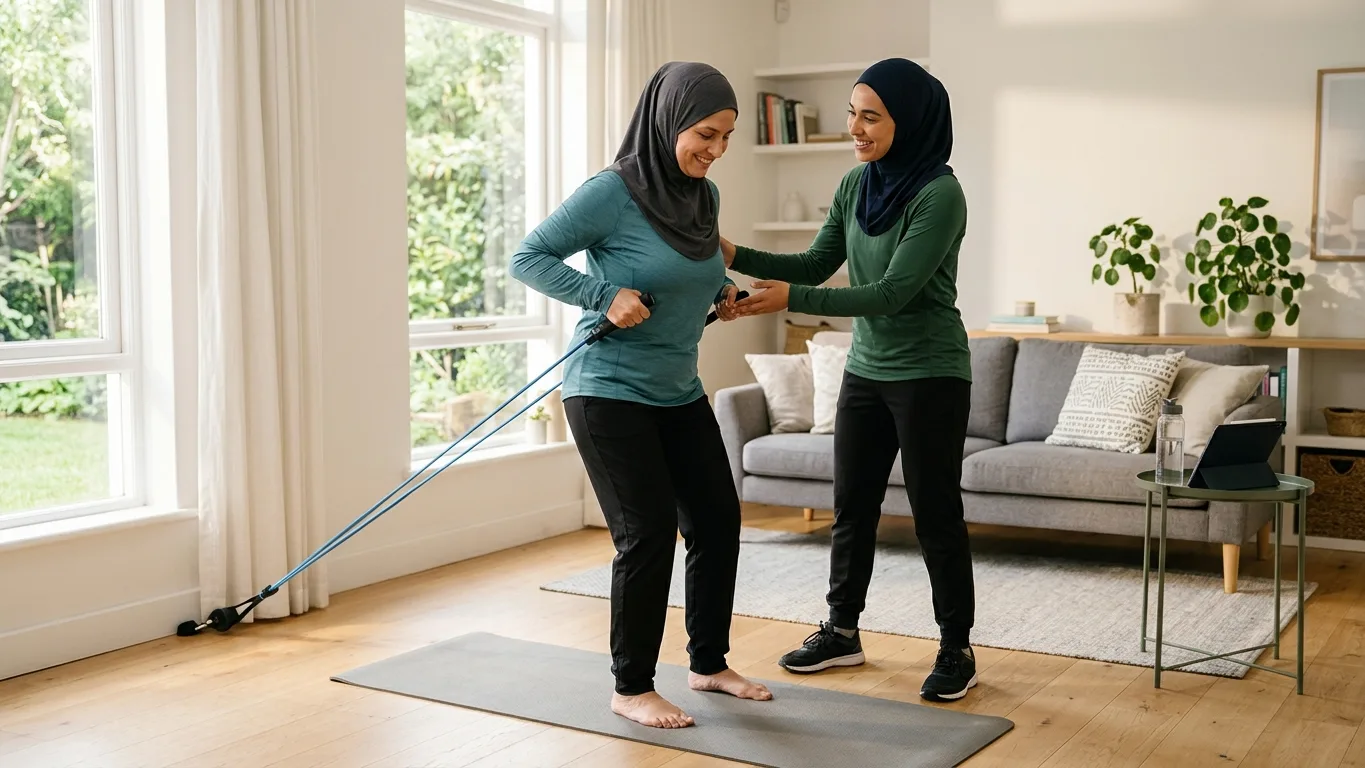
| Resistance band row | Pull | 8 to 12, up to 3 sets | Lighter band | Stronger band |
| Heel drop | Low impact | Build up gradually | Holding a chair | More force, if you have no spinal fractures |
| Heel-toe stand | Balance | Build up gradually | Hand on a table | No hand support, staying near the table |
Make your home safe
- Space clear of wires and loose rugs, supportive trainers and water nearby, as the society advises.
- Shoes with good grip and a non-slip mat in the bath or shower, from the NHS tips to reduce falls.
Frequently asked questions
Can exercise replace the treatment my doctor prescribes?
No. The Royal Osteoporosis Society says exercise is important for bone health but does not replace osteoporosis medicine. Treatment is your doctor's decision.
Is walking enough?
Walking is low impact and can help reduce the loss of bone and muscle strength, says the society, but the best way to help your bones is to combine impact and strength exercise.
Are yoga and Pilates suitable?
Some moves need adapting. See the foundation's safe yoga and Pilates flyers and ask your specialist first.
How do I choose a trainer for my condition?
One who asks about your diagnosis and fractures first and follows your specialist's plan. See choosing a female personal trainer and your first session.
Health notice: a trainer does not diagnose or treat. After an osteoporosis diagnosis or any fracture, your doctor or physiotherapist sets the programme. The Royal Osteoporosis Society advises stopping exercise if you feel sick, dizzy or lightheaded, severely short of breath, clammy or sweaty, or have chest tightness or any pain. The NHS advises seeing a GP if back pain is not getting better after a few weeks or your spine becomes curved, and urgent help for severe pain after a fall.
The bottom line
Most women with osteoporosis can exercise safely, combining balance, strength and the right level of impact, while avoiding or adapting loaded forward bending, sit-ups and extreme twisting. With Sporship, a female trainer comes to your home, assesses you in the first session and builds a programme for your goal within your doctor's plan.
Photo: Ser Amantio di Nicolao, licensed under CC BY-SA 4.0.
How this article was made: Drafted with the help of AI tools, then reviewed and edited by a Sporship specialist, using the sources linked in the article.