Strength Training for Women Over 40: Home and Gym Plans
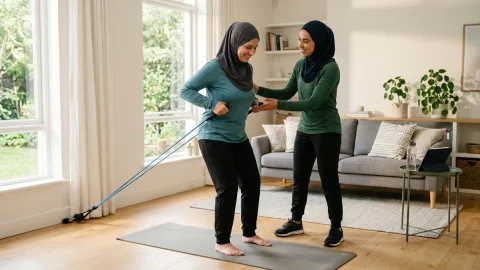
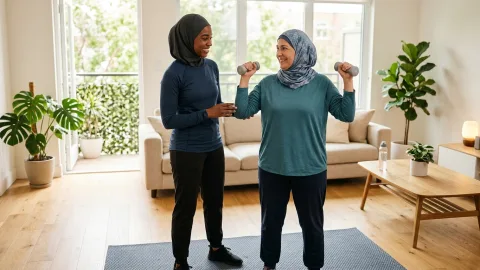
After 40, strength training on 2 or more days a week becomes the base of a good plan, alongside walking and balance work. Here is a home plan, a gym plan, how to protect your joints and how to fit it into a busy week.
 By Abdelrhman MohamedCo-Founder & Head of Operations and Expansion
 Reviewed by Dr. Hagar AlyAmerican Board-Certified Clinical Pharmacist & Clinical Nutritionist
 Reviewed by Youssef HarounHead of Fitness & Sports PerformancePublished
In this article 12
- Why strength training matters more after 40
- Bones: why training on your feet counts
- Home plan: 2 or 3 days a week
- Gym plan if you prefer machines
- Protecting your joints
- Fitting it into a busy week
- Frequently asked questions
- Is it too late to start strength training after 40?
- Do I need heavy weights?
- Is walking enough on its own?
- How do I know a trainer suits my age and level?
- The bottom line
Strength training for women over 40 means working all the major muscle groups on at least 2 days a week, starting light and adding load gradually. Pair it with at least 150 minutes of moderate activity such as brisk walking, plus a few minutes of balance work. You can do all of it at home or in a gym, and fit it around a busy week.
Below: why strength matters more after 40, a home plan, a gym plan, joint care and fitting it all into a full schedule. To start with someone checking your form, read our guide to a female personal trainer at home.
Why strength training matters more after 40
The World Health Organization recommends 150 to 300 minutes of moderate activity a week for adults, plus muscle-strengthening activities on 2 or more days. At 40 the strength part starts to matter more.
The NHS says strength and flexibility exercises help increase muscle strength, maintain bone density, improve balance and reduce joint pain. It adds that muscle-strengthening activities slow down the rate of bone and muscle loss associated with ageing, and can reduce your chances of falling.
Your 40s also come just before the menopause transition. The US National Institute on Aging says most women begin it between 45 and 55, and that you may lose muscle, gain fat and feel stiff, achy joints. Build the strength habit now and it is already part of your week when you get there.
Bones: why training on your feet counts
The Royal Osteoporosis Society explains that bones lose strength when you are inactive and get stronger when you use them. It says the best approach combines two types of exercise:
- Impact exercise: you are on your feet and extra force travels through your bones each time your feet hit the ground, as in walking, stair climbing, jogging and dancing.
- Strength exercise: your muscles work against resistance from your body weight, a resistance band or dumbbells, and pull on your bones as they work.
Its page on impact exercise adds that swimming and cycling are good for fitness but are not impact exercise, because the water or the bike holds your weight. If you love swimming, keep it and add walking and strength work.
Home plan: 2 or 3 days a week
The Royal Osteoporosis Society groups strength exercises into four movements: hinge, push, pull and squat, and its strength exercise page recommends one from each group every session. The NHS describes a set as 8 to 12 repetitions, and suggests at least 2 sets, or 3 for more benefit, working to the point where another repetition with good form would be hard.
| Exercise | Sets | Reps | Easier | Harder |
|---|---|---|---|---|
| Chair squat | 2 to 3 | 8 to 12 | Shallower, holding the back of a sturdy chair | Goblet squat with one dumbbell |
| Dumbbell Romanian deadlift | 2 to 3 | 8 to 12 | No weight, hands on thighs | Heavier dumbbells |
| Wall push-up | 2 to 3 | 8 to 12 | Stand closer to the wall | Incline push-up on a sturdy table |
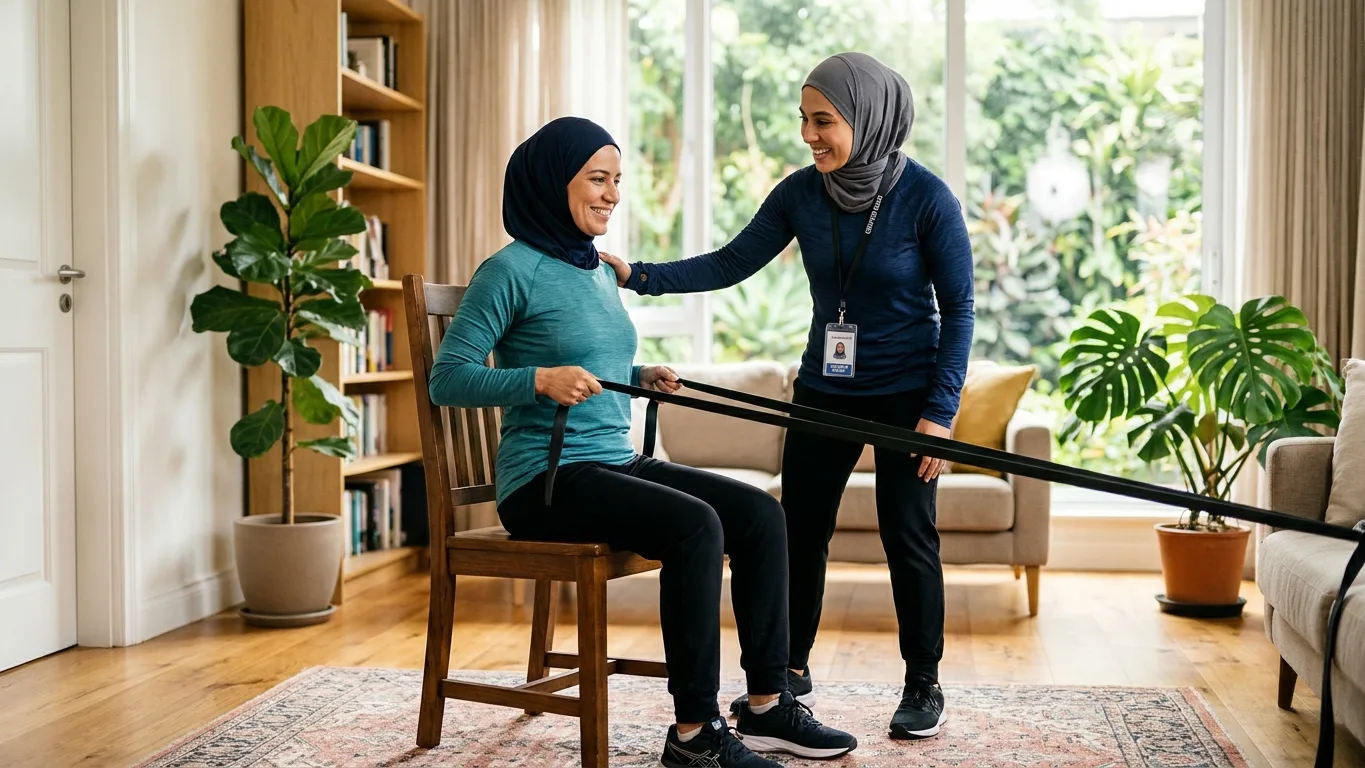
| Resistance band row | 2 to 3 | 8 to 12 | Lighter band | One-arm dumbbell row |
| Calf raise | 2 | 8 to 12 | Holding a chair | No support |
| Single-leg stand | 3 per leg | 5 to 10 seconds | Fingertips on the wall | Step slightly away from the wall |
The calf raise and single-leg stand come from the NHS balance exercises, which also include the heel-to-toe walk. The National Institute on Aging advises against working the same muscle group on two days in a row, so leave a day between strength sessions.
Gym plan if you prefer machines
Machines make it easy to add load in small steps. Start light with clean form, and add a little once 12 reps feel easy.
| Exercise | Sets | Reps | Easier | Harder |
|---|---|---|---|---|
| Leg press | 2 to 3 | 8 to 12 | Lighter weight, shorter range | Goblet squat |
| Lat pulldown | 2 to 3 | 8 to 12 | Lighter weight | Add weight gradually |
| Chest press machine | 2 to 3 | 8 to 12 | Lighter weight | Incline dumbbell press |
| Seated cable row | 2 to 3 | 8 to 12 | Lighter weight | Add weight gradually |
| Glute bridge | 2 to 3 | 8 to 12 | No weight | Weighted glute bridge |
Not sure whether a gym or home sessions suit you better? Compare them in ladies' gym vs a female trainer at home.
Protecting your joints
- Warm up and cool down: the Royal Osteoporosis Society's safety advice says warming up makes exercise more effective and reduces the chance of injury, and cooling down helps flexibility.
- Technique before load: it says how you lift matters more than how much, and to put the weight down if you feel strain in your back.
- Knee position: for mini squats the NHS describes keeping your knees facing forwards over your big toe, with your back straight.
- Soreness vs pain: stiffness for a few days after new exercise is normal, says the society. Sharp joint pain during a movement means stop.
Fitting it into a busy week
The NHS physical activity guidelines for adults suggest spreading exercise over 4 to 5 days a week, or every day. Strength work can be on the same day as your walking or a different day, but it does not count towards your 150 minutes of aerobic activity. The WHO adds that any amount of activity is better than none.
- Two fixed strength sessions in your calendar.
- Brisk walks on other days, at a pace where you can talk but not sing (the NHS test for moderate intensity).
- Balance exercises in spare minutes, next to a wall.
Frequently asked questions
Is it too late to start strength training after 40?
No. The NHS advises starting gradually and building up over weeks, and speaking to your GP first if you have not exercised for some time or have a medical condition.
Do I need heavy weights?
Not at the start. Begin with your body weight, then a band, then dumbbells. The NHS measure is not a number: you work until another repetition with good form would be hard.
Is walking enough on its own?
No. The WHO adds strength training on 2 or more days, and the NHS treats it as extra to your 150 minutes, not a replacement.
How do I know a trainer suits my age and level?
Ask how she assesses beginners. Our guides on choosing a female personal trainer and what happens in your first session can help.
Health notice: a trainer does not diagnose or treat. The NHS advises talking to your GP before starting if you have not exercised for some time, or have medical conditions or concerns. The National Institute on Aging says aerobic activity should not cause dizziness, chest pain or pressure, or nausea: if it does, stop and see your doctor.
The bottom line
After 40, make strength training on 2 or more days a week the base of your plan, add brisk walking and short balance sessions, and increase the load gradually. Home is enough to start; a gym suits you if you like machines. With Sporship, a female trainer comes to your home, assesses you in the first session and builds a programme for your goal.
Photo: Cyril Saulnier c_reel (public domain).
How this article was made: Drafted with the help of AI tools, then reviewed and edited by a Sporship specialist, using the sources linked in the article.